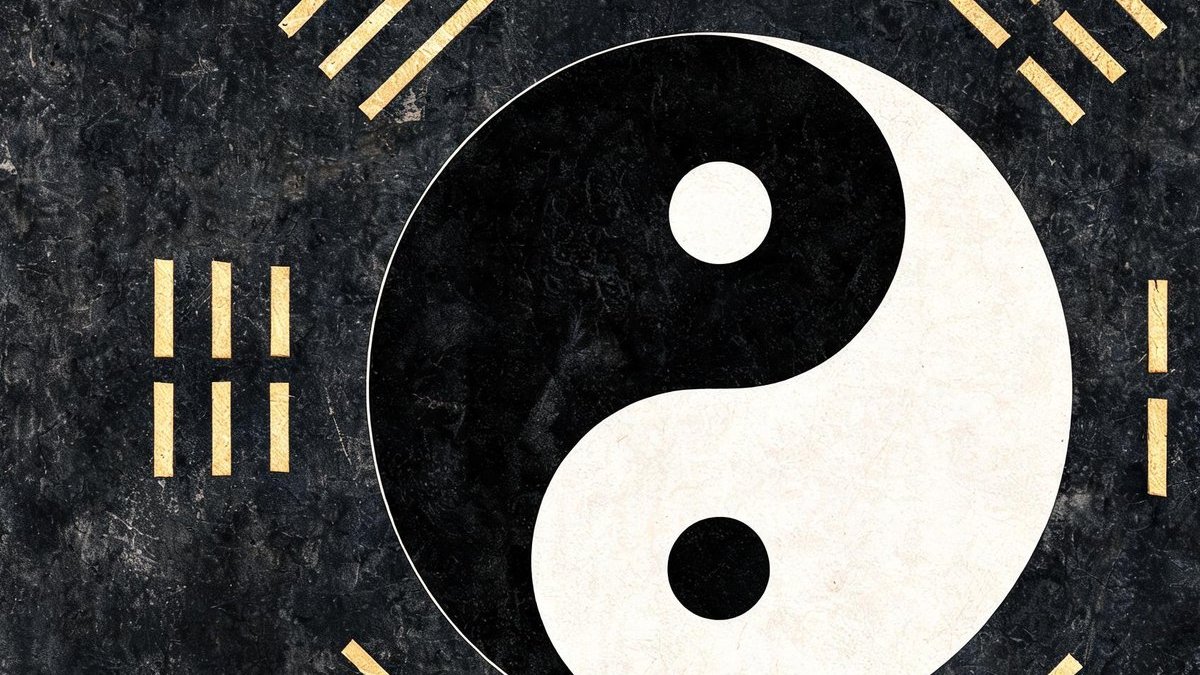
Zhou Yi: The 3,000-Year-Old Book of Changes
Three thousand years ago, a Chinese king sat in prison and did something remarkable. He didn't write a memoir or plan an escape. King Wen of Zhou rearranged eight trigrams into sixty-four hexagrams and wrote judgment texts for each one. His son, the Duke of Zhou, added line-by-line commentary. Confucius himself wrote philosophical appendices. The result? The Zhou Yi (周易) — the Book of Changes. Still in print. Still consulted daily across East Asia.
Westerners call it the I Ching. But "I Ching" is just the Wade-Giles romanization of 易经 — the same book. What makes it extraordinary isn't its age. It's that the thing actually works. Generals consulted it before battle. CEOs consult it before mergers. Regular people toss coins to ask about love, career, and family — and keep getting answers that make sense.
What Is Zhou Yi?
Zhou Yi is not a prediction machine. It doesn't tell you exactly what will happen. Instead, it reads the present moment — the configuration of forces acting on your situation right now — and shows you where those forces are heading if nothing changes. Think of it as weather forecasting for your life. You see the storm coming. You decide whether to carry an umbrella.
At its foundation is the observation that everything changes. Nothing stays fixed. The only constant is transformation itself. Zhou Yi maps sixty-four phases of change — from pure creative force (Hexagram 1, Qian) to total exhaustion and recovery (Hexagram 64, Weiji). Every situation you'll ever face sits somewhere on this spectrum.
The Structure: 64 Hexagrams
Each hexagram is a stack of six lines. Each line is either broken (Yin, — —) or solid (Yang, ———). That's it. Two types of lines. Six positions. Sixty-four possible combinations. From this simple system emerges a map of every significant situation in human life.
Take Hexagram 3, Zhun (Difficulty at the Beginning). It shows a tiny sprout pushing through hard soil. The message? Starting is hard. That's normal. Keep pushing. Hexagram 11, Tai (Peace), shows heaven below and earth above — the natural order, everything flowing. Hexagram 12, Pi (Stagnation), reverses it: heaven above, earth below. Disconnection. Things stuck. The hexagram doesn't just describe your situation — it suggests the movement needed to restore flow.
How Zhou Yi Works
You ask a question. Clear, specific, genuine. Not "will I be rich" but "should I take this new job offer?" Then you generate a hexagram — traditionally by sorting fifty yarrow stalks, but three coins work fine. Six tosses. Heads = Yang, Tails = Yin. Bottom line first, build upward. The resulting hexagram is your primary reading.
Changed lines matter. If you toss three heads (old Yang) or three tails (old Yin), that line is "changing" — it flips to its opposite, generating a second hexagram. The first hexagram describes your current situation. The second describes where things are heading. The changing lines are where the action is.
Key Philosophical Principles
Yin and Yang: Not good versus evil. Complementary forces that define each other. Day defines night. Activity defines rest. Masculine defines feminine. Every hexagram is a snapshot of their dance.
The Dao: The natural way of things. Zhou Yi doesn't tell you to fight the current. It shows you the current so you can flow with it. Sometimes the wise move is to wait. Sometimes it's to act decisively. The Dao determines which.
Wu Xing (Five Elements): Wood, Fire, Earth, Metal, Water — not literal elements but phases of transformation. Every hexagram carries elemental qualities that interact with your situation. A Fire-dominant reading during a Metal year? That's friction. The oracle flags it.
Practical tip: Don't consult Zhou Yi for yes/no questions. Ask "what do I need to understand about this situation?" The oracle rewards good questions.
Zhou Yi won't tell you your future. It will show you your present with uncomfortable clarity. Ready to look? Get your free reading →